Myrtha
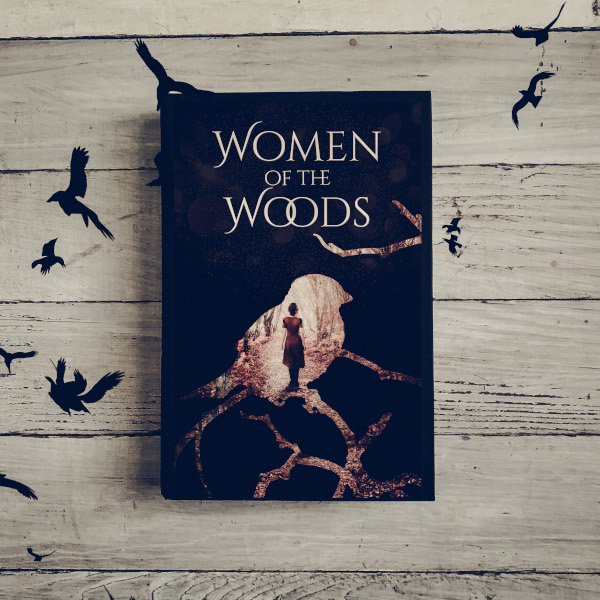
First published in the Women of the Woods anthology by Fabled Collective.
The heart of the forest does not beat. It is not warm, and it does not flush its thoroughfares and byways with benevolent life. It blocks the sun’s gleaming with a canopy of dense, interwoven needles and drains all that catches in its cold, black arteries, the air sticky like thick, stagnant blood. The heart of the forest is dead, and the dead keep it.
The air surrounding the cemetery in the forest wavers blue and green, like an underwater grotto. Sepulchres rise from the sod, shifting, tilting, cracking with the movement of the earth as the years pass. The ground does not rest here, and neither do the dead within it. Beneath the old oak tree at the back of the cemetery lies the grave of Myrtha, and above it, she stands, watching.
In life, Myrtha was a girl. One might say only a girl, as if there is not inherently a magnitude to what that entails. She was both strong and gentle, quick-witted and demure, kind and proud. There are rules to living and yet more rules to being a girl. But Myrtha satisfied them all.
Rules are not followed merely for their own virtue, however, and Myrtha eagerly awaited her well-earned reward. As the stories were told, good girls who followed the rules would find kind, loving husbands and prosperous, comfortable households. Myrtha closed her eyes and saw beautiful, brightly-coloured gowns, a warm fire in a house of her own, and healthy children playing with finely crafted toys in her future.
Her promised happy ending seemed close at hand when the royal court travelled through the village, depositing a swarm of noblemen on their very doorstep. The handsome duke, Theodor, caught Myrtha’s eye and she, his. He wooed her with fresh forest flowers and pining poetry, promising eternal devotion and marital felicity. Her excitement could not be contained, and the wedding was set within weeks.
Crowned with orange blossoms and adorned in delicate white lace, she eagerly awaited her bridegroom on the appointed day. But as the day turned to night and no trace of Theodor or the rest of the court could be found, Myrtha’s future slipped from her grasping fingers, and her broken heart consumed her.
The restful peace of a soul grown weary after a long, fulfilling life was not what awaited Myrtha. No quiet, eternal bliss would be hers as she moved beyond the reach of her beloved friends and family. Throughout time, men have played with and discarded women with no more thought than a child has for a toy. Unlike a toy, however, a woman has a soul, and a soul does not die.
Stories speak of the spirits that wait in the woods, the wisps that wander and wallow in grief, but those who should be wary of the wilis never listen. Were it less deserved, the fate of the wilis’ betrayers would be a tragedy, but remorse is wasted on the remorseless.
The wilis, the wretched shades of wronged women who watch from the woods, whispered to Myrtha in her cold forest bed, “Come with us, sister. Come with us, and right your wrong.”
Through layers of earth she rose, emerging like a flower in a pale shroud of moonlight. The forest was filled with wavering white spirits amongst the trees, ghosts whose welcoming arms stretched out to her. But as enticing and affectionate as they were, their arms were not the ones she had expected to seek comfort in that night.
“I wonder,” she said to the wilis, “If I might see him.”
“You might,” they responded.
She thought on this, wondering if she truly wanted to see Theodor’s grieving. Would his tears make to her lost soul any difference? Perhaps her presence, such as it was, could be of some comfort to him in this dark hour. The weight of whatever cruel twist of fate had parted them and caused such tragedy need not rest on his shoulders alone.
His presence pulled at her from afar, and she followed the unseen beacon. Neither space nor time proved any obstacle as she travelled the miles between them like a butterfly flitting between flowers. The small village in which she arrived was very like her own. Much of it lay still and quiet, sleeping in the serene night, but warm, lively light beckoned from the windows of the inn.
Woe turned to wrath as Myrtha peered inside. Theodor had no more tears than she had breath. Surrounded by the other nobles of the court, he laughed jovially, swinging a half-empty tankard of ale as he winked at a girl of striking similarity to Myrtha. She smiled at him, her eyes sparkling while she danced.
Theodor looked out the window over his tankard and choked, dropping the vessel as he coughed. Myrtha glowered, resenting each gasping, laboured breath he took. In a moment, he joined her outside. He looked with terror on her diaphanous figure, solid as the steam of his quivering breath in the night air.
Silently, she mirrored the dancing of the girl inside the inn. Her light, merry steps moved fast with no weight of a body to slow her. She beckoned to Theodor, and he took her hand without hesitation. As they whirled in a nuptial waltz, the wilis surrounded them, dancing ever swifter in a tightening circle that immersed the world in ethereal white.
He did not see the lights of the village fade away, blocked out by the towering trees. He did not hear the owl’s warning screech as they danced deeper and deeper into the woods. He did not feel when the soft forest floor gave way to icy black water.
The wilis surrounded the lake, dancing on the shoreline as Myrtha’s beguiling smile widened to bare her teeth. Theodor’s sudden horror as he finally realized where he was lasted only a moment before he was plunged beneath the gently rippling waves. Incorporeal hands pushed, and fatigue pulled him down into the abyss as the first hint of sun lightened the horizon.
Myrtha slept well.
The rising moon called Myrtha and the wilis from their slumber each night. Their sad legions filled the woods, mourning lives that might have been, dancing with joyless steps. But sorrow was a stranger to Myrtha now. Her sisters were too numerous, and those who condemned them too free. The salt from each ghostly tear they cried burned into Myrtha. All her own sadness died with her broken heart, and she would not be bound by eternal despair. She cast it aside with her bones and rose up in a fire.
Beware of the wilis, the stories said. Beware of their vengeance.
“Give no cause for our vengeance,” Myrtha laughed in reply, though none but her own would hear her.
Even the stories were never enough, for men are taught to be brave but not to be wise enough to fear. The wilis’ numbers only grew, and Myrtha’s rage with them. Each weeping spirit rose from her newly dug grave into Myrtha’s waiting arms, and she whispered softly to them, in a voice crackling like a growing fire, “He shall weep, too.”
Beauty is a concealing lie. It is a mask that hides the truth from those who are content not to seek it. In life, a beautiful girl is cherished as an object and sometimes treated as such. But the beautiful wilis, in death, wield beauty like a scabbard, hiding the sword within. Those who see and desire beauty wish for nothing more than a toy, and rarely receive only that for which they asked. The men who contribute to the wilis’ numbers are such men, and thus as easily enticed by the wilis as their living counterparts.
The merciless queen of the wilis demands blood from any who cross her path, the stories wailed. But Myrtha knew that none were truly innocent who fell to her sway.
Time must have passed, but the wilis took no notice. Those for whom time has stopped need not, nor can they keep track of the passage of mortal days. It happened once more that the royal court moved through the village in which Myrtha lived, and it happened once more that a duke romanced a young village girl. Cry and scream and howl as she might, Myrtha could not make the girl, Giselle, hear her desperate warnings, and so it happened once more that a broken-hearted maiden from the village was buried in a forest grave.
Myrtha took Giselle in her arms and promised revenge. But Giselle pushed her away.
“No,” Giselle said. Her glassy eyes looked up at Myrtha with apprehension. “I have no desire to hurt Albrecht.”
Myrtha saw in the young spirit the same sweet softness that Theodor’s betrayal had driven out of her. How distant the girl who believed in love and happiness seemed to her now! The withered remains of her soul had grown cold as the earth surrounding her body. She knew she, too, would have resisted the knowledge she now imparted to Giselle, had the wilis tried to tell her before she saw for herself. Taking Giselle’s hand in her own, she drew it to her chest. “Darling sister, don’t you know what you are? You waste kindness on one who had every desire to hurt you.”
Giselle pulled her hand back. “I love him,” she insisted.
Oh, how girls would brandish their love as if it excused the actions of others. Myrtha once believed so herself. “Love requires honesty. Did he love you?”
Even then, Giselle could not share the anger and hatred of Myrtha and the wilis. Her face bore nothing but serene sadness as she spoke, her voice as gentle as a song on the summer wind. “You have no heart.”
“I did, once.”
Dawn broke over the forest, harsh and jagged. Confined to the dark, Myrtha restlessly waited for the light to recede into night. She felt all the rage Giselle could not, compounded with her own fury. The central tenet of Myrtha’s life was of equal weight in death; one must receive what one has earned. If no other force would ensure this, she would be the hand of retribution the divine failed to be. Giselle’s insistence that the nature of the beloved had no bearing on her love was nonsensical, but Myrtha was sure, in time, she would see the folly of such disregard. Albrecht’s behaviour had killed Giselle, and such actions merited a response in which the wilis were well-versed.
The moonlight touched the ground, and the wilis rose in a frothing, foaming wave around Giselle’s still-fresh grave. Albrecht knelt at the end, a small bouquet of wildflowers loosely held in his hand. Their misty hands caressed his face, raising him to his feet as they trapped him in their dance. Clumsily, his feet followed their steps, moving faster and faster as the village clock chimed in the distance. They caught him in the centre of their whirling vortex, laughing as he reached out with heavy, tired arms in a vain attempt to steady himself.
Myrtha no more heard Giselle’s pleas for mercy than the rustling of leaves in the breeze. As Albrecht danced closer to death, she saw in her mind the faces she spared from his callous cruelty, faces she hoped never to see amongst the ranks of the wilis.
The dance showed no sign of slowing as the night wore on. Over and over, the wilis spun Albrecht around in their midst, pushing and pulling him to and fro as his weary feet stumbled in fruitless attempts to keep the pace. The clock’s chimes seemed to sound endlessly, sounding no longer as a track of the hours, but the herald of eternal night.
It was just as Myrtha thought his wretched heart should have given out already that the sun’s first light stung her eyes. The diminishing dark dragged the wilis back to their graves, and the last thing she saw before slipping beneath the dirt was Albrecht, blinking in the brightness, and Giselle, touching his cheek as she vanished.
The wilis and their queen still haunt the woods; though, Giselle’s face is not amongst them. Flitting forms glimpsed through the forest trees set their trap like spiders spinning gossamer webs, dancing their prey to death. Once long ago, when her heart was unbroken and she walked in daylight, Myrtha came across a spider caught in its own web. She watched it writhe and flail next to its prey, peacefully still in its eternal sleep. She thinks on it often now, as she stands sentinel over the graves of her countless sisters while they sway in the dark.